

Roland Garros 2026: How Iga Świątek’s Form Is Changing the Balance of Power in Women’s Tennis
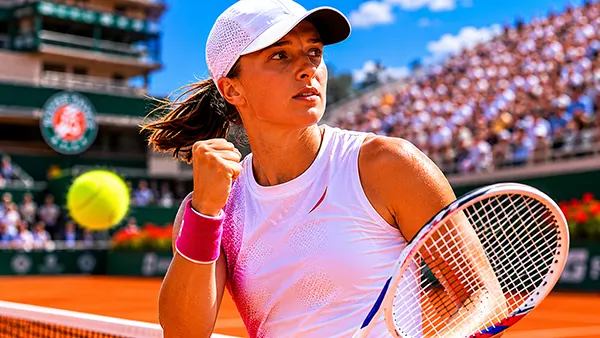
As Roland Garros 2026 approaches, one of the most discussed topics in women’s tennis is the current form of Iga Świątek. The Polish star has already established herself as one of the defining players of her generation, particularly on clay courts, where her consistency and tactical discipline have often separated her from the rest of the field. However, the landscape of women’s tennis has evolved significantly over the past two seasons. New contenders have emerged, established rivals have refined their games, and competition at Grand Slam level has become increasingly intense. Against this backdrop, Świątek’s performance in Paris is expected to influence not only the outcome of the tournament but also the broader hierarchy of the WTA Tour.
Why Roland Garros Remains Świątek’s Strongest Major
Clay has traditionally amplified the strengths of Iga Świątek’s game. Her exceptional movement, ability to slide efficiently into shots, and skill in constructing points over extended rallies allow her to control matches in a way few players can replicate. Roland Garros has repeatedly showcased these qualities, making Paris the venue where she has enjoyed some of the most dominant performances of her career.
Another important factor is her tactical adaptability. While many players rely heavily on power from the baseline, Świątek combines aggression with patience. She can change direction effectively, vary spin levels, and exploit weaknesses in opponents’ court positioning. These qualities are particularly valuable on clay, where rallies often become strategic battles rather than outright hitting contests.
The psychological aspect should not be overlooked. Success at a specific tournament often creates a positive feedback loop. Previous achievements at Roland Garros have given Świątek a level of confidence that can influence key moments in matches. Entering Paris with a proven record provides a significant competitive advantage over rivals who are still seeking their first major breakthrough on clay.
How Her 2026 Preparation Differs From Previous Seasons
The 2026 season has presented different challenges compared with earlier years. The depth of competition on the WTA Tour has increased, requiring top players to maintain a consistently high level across multiple tournaments rather than relying on isolated peaks in form.
Świątek’s scheduling and match management have also attracted attention. Modern tennis places substantial physical demands on players, particularly those competing deep into events on a regular basis. Careful workload management has become an essential component of Grand Slam preparation.
Technical adjustments have played a role as well. Analysts have noted continued refinement in her serve patterns and return positioning, aimed at creating more immediate advantages in rallies. These developments could prove particularly important during the later stages of Roland Garros, where matches are often decided by small tactical margins.
The Rivals Challenging Świątek’s Position at the Top
The women’s game in 2026 is characterised by a remarkable level of depth. Players such as Aryna Sabalenka and Coco Gauff continue to compete for major titles, while several younger talents have established themselves as regular threats at premier tournaments. This competitive environment has reduced the gap between the very top players and the chasing pack.
Sabalenka remains one of the most dangerous opponents due to her ability to generate pace from both wings. When performing at her highest level, she can dictate rallies against any player on tour. Her challenge on clay has traditionally been maintaining consistency over extended exchanges, but improvements in this area have made her a more complete competitor.
Gauff, meanwhile, has continued to develop her all-court game. Her athleticism, defensive capabilities, and increasing confidence in attacking situations make her particularly dangerous during Grand Slam events. Matches between Gauff and Świątek have become important indicators of the shifting balance among the sport’s leading figures.
Emerging Players Reshaping the WTA Landscape
Beyond the established stars, a new generation is beginning to influence major tournaments. Young players are arriving on tour with fewer technical weaknesses and a greater understanding of modern performance analytics than previous generations.
Several rising competitors have demonstrated an ability to challenge top-ranked opponents without being intimidated by reputation. This trend has contributed to more unpredictable tournament draws and increased pressure on leading players from the opening rounds.
For Świątek, these developments mean that sustaining dominance requires continuous evolution. Success can no longer depend solely on established strengths; adaptation has become essential in an environment where opponents rapidly study and counter successful playing patterns.
What Świątek’s Form Means for the Future of Women’s Tennis
The significance of Świątek’s performances extends beyond individual results. As one of the most influential figures in the sport, her success shapes competitive standards across the WTA Tour. Players seeking to challenge for major titles often analyse her movement, shot selection, and strategic decision-making.
If she delivers another strong campaign at Roland Garros 2026, it would reinforce the idea that sustained excellence remains possible in an increasingly competitive era. Consistency at the highest level is becoming harder to achieve as the overall standard of women’s tennis continues to rise.
At the same time, any signs of vulnerability would encourage rivals who believe the gap at the top is narrowing. Grand Slam tournaments frequently serve as turning points in sporting narratives, and Paris could once again become a defining moment in the evolution of the women’s game.
The Potential Impact of Roland Garros 2026 on the WTA Rankings
Ranking points earned during major tournaments often influence the season-long battle for the world number one position. Roland Garros carries particular significance because strong performances can create momentum for the remainder of the year.
A successful run by Świątek would strengthen her position among the tour’s elite and potentially increase the pressure on direct competitors. Conversely, an early exit could open opportunities for rivals to gain ground in both rankings and confidence.
Regardless of the final outcome, Roland Garros 2026 is likely to provide valuable insight into the current state of women’s tennis. The tournament will help determine whether Iga Świątek remains the defining force on clay or whether a new balance of power is beginning to emerge at the highest level of the sport.