

Serie A’s Goal Boom: Why Italy Is Seeing Its Highest Scoring Rate in a Decade
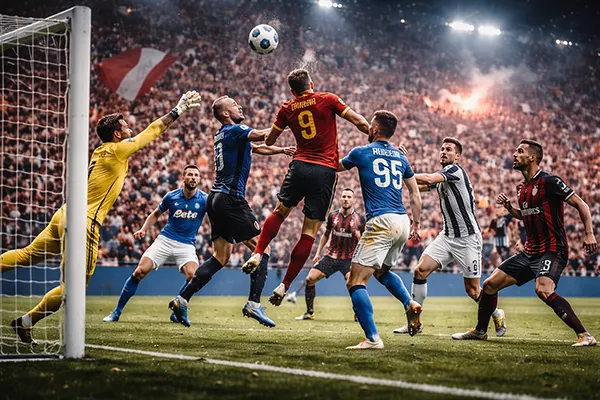
Serie A has a reputation for tactical control, but in 2024–25 that old stereotype felt increasingly out of date. Matchdays regularly produced scorelines that would have looked more at home in the Premier League a few years ago, and the conversation shifted from “Italian defending” to “Italian chaos”. The interesting part is that this wasn’t driven by one dominant attacking side alone — it was the combined effect of tactical evolution, squad-building choices, and a league that has become more transitional and less cautious.
How the numbers shifted: more transitions, more shots, more high-value chances
The clearest explanation for the scoring rise is that Serie A has become faster in the most dangerous area of football: the moment after possession changes. More teams are now comfortable attacking within two or three passes rather than resetting shape and building slowly. When the ball is moved forward earlier, defences have less time to recover, and chances tend to be higher quality — cut-backs, low crosses, and central shots inside the box rather than hopeful attempts from distance.
Another change is the reduction of “dead” phases within matches. Mid-table and even relegation-battling sides increasingly press higher for parts of games, which naturally creates broken structures. High pressing doesn’t just win the ball — it also forces rushed clearances and second-ball battles near the penalty area. Even when the press fails, it can leave space behind the midfield line, and Serie A has more attackers capable of punishing that space than it did several seasons ago.
Finally, shot profiles have improved. It’s not only that teams are shooting more; it’s that they are shooting from better locations. Coaches and analysts have pushed clubs to value penalty-box entries, near-post runs and late arrivals from midfield. The effect is visible in match rhythm: fewer slow possessions, more direct attacks, and a higher frequency of chances that actually test goalkeepers.
Why “average goals” is a league-wide trend, not just a big-club story
When only one or two elite teams score heavily, league averages can be misleading. What made 2024–25 stand out is that goal involvement rose across the table. Newly promoted sides arrived with more assertive approaches than in the past, while several established clubs moved away from survival-first football. That matters because open matches between mid-table teams produce a surprisingly large portion of total league goals over a season.
There’s also a stylistic convergence happening: even pragmatic teams now accept that they will concede chances, so they prioritise creating chances of their own. In practical terms, you see more full-backs committing forward, more midfielders running beyond the striker, and more use of wide overloads to pull defences out of shape. That creates a scenario where both teams generate opportunities rather than one side simply trying to protect a 0–0 for 70 minutes.
And importantly, the rise in scoring is not purely about bad defending. Some defensive lines are actually well-drilled, but they are asked to defend more difficult situations — counters, isolated 1v1s, and late box arrivals. When the game becomes more transitional, even strong defensive units can look exposed because the situations they face are inherently higher risk.
Tactical evolution: pressing, man-marking hybrids, and riskier build-up
A decade ago, many Serie A teams were happy to play without the ball for long stretches and keep the game in a narrow tactical corridor. In 2025, the dominant trend is controlled aggression: teams press in specific phases, switch between zonal and man-oriented references, and try to win territory earlier. The side effect is that games become less predictable and more open, especially when pressing triggers lead to turnovers near the halfway line and immediate attacks.
Build-up play has also changed. Several clubs insist on playing out from the back even under pressure, because the reward is huge if the first press line is beaten. But that choice increases the probability of dangerous losses in possession. One mistake near your own box can turn into a tap-in. Over a season, even a small increase in those moments adds goals to the overall league total.
Another tactical detail is how teams attack the box. Serie A sides are now better at structuring their final-third play: a winger stretches the line, a full-back underlaps, and a midfielder arrives late between defenders. Those coordinated runs create the kind of “simple” chances that inflate goal totals — finishes from six to twelve yards rather than low-probability shots.
Set pieces and penalty-box behaviour: the hidden source of extra goals
Set pieces continue to grow in importance, and in many Serie A matches they are the difference between a routine 1–0 and a chaotic 3–2. Clubs have invested more in specialist coaching, better delivery, and detailed blocking schemes. Even teams that struggle to create in open play can generate strong scoring value from corners and wide free-kicks, which raises the league’s overall goal output.
Penalty-box behaviour has improved too. You see more teams actively targeting second balls and rebounds. Instead of one forward isolated against two centre-backs, attacks often include three or four runners. That means a saved shot doesn’t end the threat — it becomes an opportunity for a follow-up finish. Those “messy” goals count the same as long-range screamers, and they add up over a season.
There’s also a psychological element: once teams accept that matches will contain swings, they attack with less fear after conceding. In older Serie A cycles, going 1–0 down often led to panic and disorganisation. In 2024–25, many teams respond with a more structured push — higher pressing, faster ball circulation, and more bodies in the box — which increases the likelihood of equalising and creates end-to-end sequences.
Squad building and player profiles: more finishing quality, more creative passing
Serie A’s recruitment has become sharper. Clubs that cannot match Premier League spending have leaned into targeted signings: forwards who convert at a higher rate, wide players who can beat a man, and midfielders who can play vertical passes under pressure. When the league collectively adds even a small layer of finishing and creation, average goals rise without needing any dramatic rule changes.
Another factor is the evolution of the “number 9” role in Italy. There are more forwards comfortable receiving under pressure, linking play, and attacking the near post. That creates more consistent shot volume inside the box. At the same time, several teams have midfielders contributing goals through late runs, which spreads scoring responsibility and prevents opponents from neutralising one focal striker.
Depth matters as well. In many squads, the drop-off between starters and substitutes is smaller than it used to be, particularly in attacking positions. Late goals often come from fresh legs against tiring defences. When substitutions maintain attacking intensity, matches don’t slow down — they accelerate.
Why this trend can continue beyond 2025 — and what could slow it down
The conditions for higher scoring are not temporary. Tactical approaches that create transitions, higher presses, and quicker attacks are now standard coaching language, not a fashionable phase. Youth development is also producing players with better athletic profiles and more confidence in playing forward, which supports an open style across multiple seasons.
That said, football always responds. If goals stay high, defensive coaching will adjust: deeper rest-defence structures, more conservative full-back roles, and better counter-pressing to kill transitions early. Some clubs may also choose to lower risk in build-up if costly mistakes become too frequent. If that happens widely, the league can pull back towards the middle.
Still, as of 2025, Serie A’s goal surge looks like a real transformation rather than a statistical fluke. The league is simply producing more situations where goals are likely — and when the match environment rewards attacking bravery, the average goals figure naturally rises with it.