
Hydrogen Engines: Where This Technology Makes More Sense Than Battery Electric Power
Hydrogen engines are not a direct replacement for every battery electric vehicle, and they are unlikely to dominate ordinary passenger cars. Their strongest case in 2026 is narrower and more practical: heavy machines, long-duty transport, high-utilisation fleets and remote operations where battery weight, charging time or grid capacity can become a serious operational problem.
Why Hydrogen Engines Are Being Reconsidered in 2026
Battery electric systems have become the leading low-emission choice for many cars, vans, buses and urban delivery vehicles because electric motors are efficient, charging networks are expanding and battery costs have improved over the past decade. For predictable daily routes, overnight depot charging and lighter vehicles, batteries often provide the simplest technical solution. The problem appears when the vehicle or machine has to work for long hours, carry heavy loads, refuel quickly or operate far from strong electrical infrastructure.
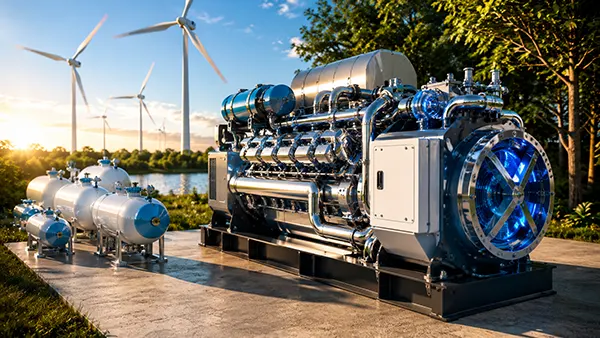
A hydrogen internal combustion engine burns hydrogen in a modified engine rather than using it in a fuel cell. That means it can retain much of the familiar engine architecture used in trucks, buses, construction equipment and agricultural machinery. It still needs dedicated fuel tanks, injection systems, safety controls and clean hydrogen supply, but the basic maintenance logic is closer to conventional engine fleets than to full battery electric conversion.
The main benefit is not magic efficiency. Battery electric drivetrains remain more energy-efficient from grid to wheels. Hydrogen engines make sense where the operational value of fast refuelling, lower battery mass, long working hours and familiar heavy-duty engineering can outweigh the energy losses involved in producing, compressing, transporting and storing hydrogen.
How Hydrogen Combustion Differs from Fuel Cells
Hydrogen combustion engines and hydrogen fuel cells are often discussed as if they were the same technology, but they work differently. A fuel cell converts hydrogen into electricity through an electrochemical process and then powers an electric motor. A hydrogen combustion engine burns hydrogen inside cylinders, using a process closer to petrol, diesel or gas engines.
This difference matters because fuel cells are generally more efficient, while combustion engines can be more tolerant of harsh operating conditions, vibration, dust and high-load cycles. That is one reason hydrogen combustion is being tested for heavy trucks, construction machines and other equipment where durability and service familiarity are important.
Hydrogen combustion is not completely emission-free at the tailpipe. It produces no direct carbon dioxide when pure hydrogen is used, but high-temperature combustion can create nitrogen oxides, which require after-treatment. The environmental result therefore depends on engine design, emissions control and, most importantly, whether the hydrogen is produced from low-emission sources.
Where Hydrogen Engines Can Beat Batteries in Practical Use
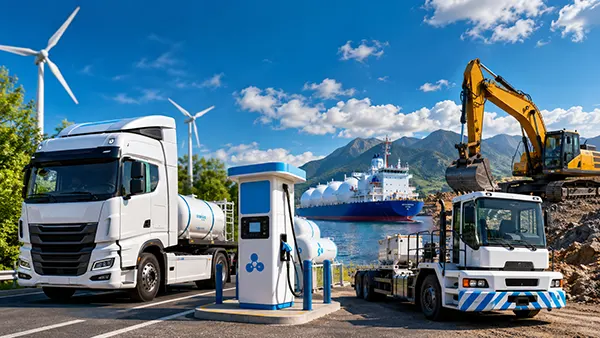
The clearest use case is heavy-duty transport that runs for long hours and cannot spend much time charging. A long-haul truck, regional freight vehicle or heavy coach may lose productivity if it needs large battery packs and extended charging stops during the working day. Hydrogen refuelling can be closer to diesel-style operating patterns, although this advantage only exists where reliable refuelling infrastructure is available.
Construction machinery is another strong candidate. Excavators, loaders, backhoe loaders, dump trucks and other off-road machines often work on sites where charging several large batteries would require expensive grid upgrades or diesel generators. A hydrogen engine can allow high power output, fast refuelling and long operating shifts while preserving much of the mechanical layout that contractors already understand.
Hydrogen engines may also have value in ports, mines, quarries, rail support operations and large logistics hubs. These locations can justify local hydrogen storage and refuelling because vehicles return to a fixed base. In such controlled environments, the infrastructure challenge is easier than building a national public refuelling network for private cars.
Why Passenger Cars Are Usually a Weaker Case
For most private cars, batteries are usually the more logical option. Daily mileage is often modest, home or workplace charging can cover many journeys, and electric cars use energy more efficiently than hydrogen combustion vehicles. In this segment, hydrogen faces a difficult combination of higher fuel infrastructure costs, lower energy efficiency and limited public refuelling coverage.
Hydrogen cars can still work in specific regions with strong policy support and dense refuelling networks, but they are not the centre of the strongest business case. The more convincing argument is commercial use, where vehicles earn money by staying active and where time lost to charging can have a measurable cost.
This is why several major manufacturers and engine specialists focus hydrogen combustion research on trucks, industrial engines and heavy equipment rather than ordinary family cars. The technology is being judged less as a lifestyle choice and more as a tool for difficult duty cycles that batteries do not always serve well.
The Infrastructure and Energy Reality Behind Hydrogen Engines
The biggest weakness of hydrogen engines is the fuel system around them. Hydrogen must be produced, compressed or liquefied, transported, stored safely and dispensed at suitable pressure. Each step costs money and consumes energy. If the hydrogen is made from fossil gas without effective carbon capture, the climate benefit is limited, even if the engine itself emits no carbon dioxide from the exhaust.
Low-emission hydrogen is still a limited resource in 2026. Global hydrogen demand remains concentrated in existing industrial uses such as refining, ammonia and methanol, while newer uses in mobility and power are still small. That means transport applications need to compete for clean hydrogen with industries that may have fewer alternative decarbonisation options.
Infrastructure policy is improving, especially in Europe, where hydrogen refuelling targets are being linked to major transport corridors. Even so, the practical rollout is slower and more expensive than installing many types of electric chargers. This makes hydrogen engines most realistic for fleets that can refuel at depots, industrial sites or fixed corridors instead of relying on widespread public availability.
Where the Technology Is Most Likely to Fit Long Term
Hydrogen engines are most likely to remain a specialist solution rather than a universal one. Their future depends on clean hydrogen supply, robust refuelling networks, competitive fuel pricing and strict emissions control. Without those conditions, the technology risks becoming expensive, inefficient or environmentally weaker than promised.
The strongest long-term role is in sectors where batteries create real compromises: heavy payloads, long shifts, cold environments, remote sites, rapid refuelling needs and machines that cannot easily stop for extended charging. In these cases, hydrogen combustion can reduce reliance on diesel while avoiding some of the weight and downtime issues linked with very large battery packs.
The realistic view is that batteries and hydrogen engines are not enemies. They solve different parts of the decarbonisation problem. Batteries will continue to lead in cars, light commercial vehicles and many urban fleets, while hydrogen engines may earn a place in demanding industrial and transport niches where practical operation matters as much as theoretical efficiency.